
Planning
Roof Leaking This Winter? Repair or Replace in Bellevue, WA
How to decide if a leaking roof needs a repair or a replacement: first steps, warning signs, rainy-season scheduling and Bellevue permit rules.
By Shawn, True Level Remodeling阅读中文版
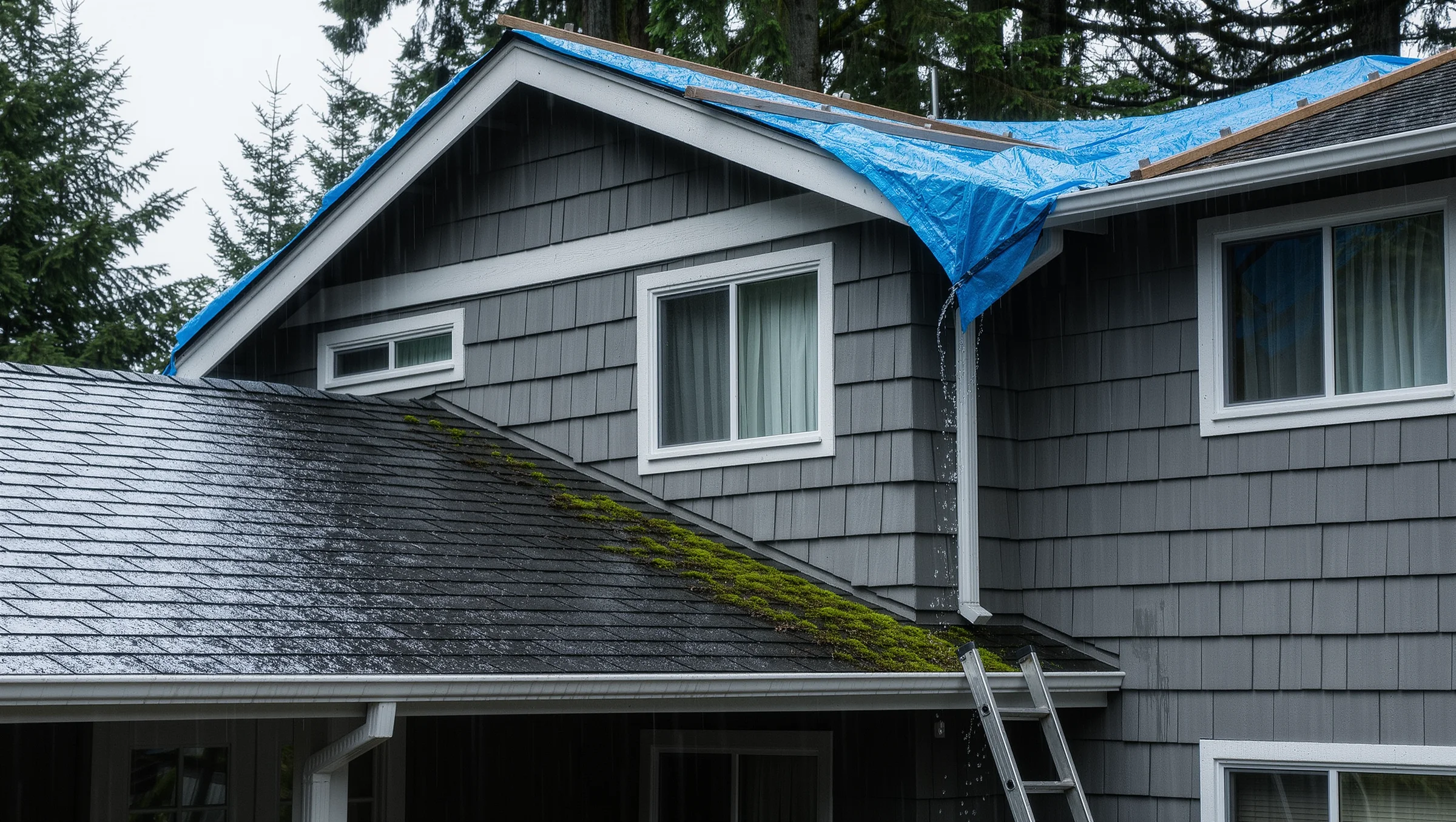
A leaking roof usually needs a repair when the leak comes from one spot, such as a cracked pipe boot, lifted flashing or a few missing shingles, and the rest of the roof still has years left. It needs a replacement when leaks show up in several places, the shingles are worn across the whole roof, or it is near the end of its typical life, which is about 20 to 30 years for asphalt shingles.
Either way, the first job in a Bellevue winter is the same: stop the water getting in, then decide calmly once someone has looked at the whole roof.
What should you do in the first 24 hours of a roof leak?
A small, fast response limits the damage to ceilings, insulation and framing. Do these in order:
- Catch the water. Put a bucket under the drip and move furniture and electronics out of the way. If a ceiling bulges with water, keep people away from it and call a professional.
- Take photos and notes. Photograph the stain, the drip and the date and weather. Your insurer and your roofer will both ask.
- Look in the attic if you can do it safely. Find where the water enters, not just where it drips. Water often runs along a rafter before it falls.
- Stay off a wet roof. Wet shingles and moss are slippery. A temporary tarp is a job for a roofer, done when the rain eases.
- Call your insurer if the leak followed a storm. Ask what they need before any permanent work starts.
- Book an inspection of the whole roof, not only the leak. The answer to “repair or replace” depends on everything else up there.
Is it a roof leak or something else?
Not every winter drip is the roof. Condensation in the attic and overflowing gutters cause many of the same stains, and the fixes are completely different. Timing and pattern are the best clues:
| What you notice | Likely cause | What to check |
|---|---|---|
| Drip or stain in one spot, during or right after rain | Roof leak, often at flashing, a vent, a chimney or a valley | Shingles, flashing and pipe boots above that spot |
| Damp or frost spread across the underside of the roof deck, worse after cold, clear nights | Attic condensation | Bathroom and kitchen fans venting into the attic, blocked soffit vents, air leaks from the house |
| Water at the top of an exterior wall or in the soffit | Gutters overflowing or clogged downspouts | Gutters full of needles and moss; the gutter and drip edge |
| Dark streaks, curled shingle edges, thick moss | Shingles holding water and wearing faster | Shingle condition; whether moss has lifted the edges |
Moss deserves a note. On the Eastside it grows on almost every shaded roof. It holds water against the shingles and can lift their edges, so a mossy roof is worth checking even before it leaks. Avoid pressure washing it; the water can be forced under the shingles.
Should you repair or replace a leaking roof?
The decision comes down to how widespread the problem is and how much life the roof has left. This table is a starting point for that conversation:
| What the inspection finds | Usually |
|---|---|
| One leak from flashing, a pipe boot, a vent or a few missing shingles, rest of the roof in good shape | Repair |
| Roof well within its expected life, damage from a single storm in one area | Repair |
| Leaks in several places, or repeat repairs in the last few years | Plan a replacement |
| Granule loss, curling or cracking across most of the roof, not only one slope | Plan a replacement |
| Soft or sagging roof deck, rot at the edges | Replacement, with deck repair |
| Roof near or past its typical lifespan for the material | Plan a replacement; repair the leak to get through winter |
The middle path is common: a temporary or targeted repair now, and a planned replacement in a drier stretch. That gives you time to get more than one written quote instead of deciding in the middle of a storm.
How old is too old?
The home inspectors’ association InterNACHI lists these typical lifespans (InterNACHI, Estimated Life Expectancy Chart, checked November 2026):
| Roof material | Typical life |
|---|---|
| Asphalt shingles, 3-tab | 20 years |
| Asphalt shingles, architectural | 30 years |
| Wood (cedar shake or shingle) | 25 years |
| Metal | 40 to 80 years |
These are typical ranges, not promises. Shade, moss, poor attic ventilation and the quality of the original install can all shorten them. If you don’t know your roof’s age, the permit history for your address or your home inspection report from purchase may tell you.
Can you replace a roof during Seattle’s rainy season?
Yes. Roofs are replaced around here all winter, because our winters are mild and mostly wet rather than frozen. What changes is the scheduling and the care taken while the roof is open:
- The crew works in dry windows. Shingles and underlayment shouldn’t go down on a wet deck, so the start date moves with the forecast.
- The roof is opened one section at a time. Only what can be dried in the same day is torn off, and it is covered with underlayment or tarps before the crew leaves.
- Deck repairs are found and fixed during tear-off. Soft or rotted sheathing is common under an old leak, and it’s replaced before new roofing goes on.
- Expect a few weather days. A replacement that would take a few days in August can stretch across a couple of weeks in December.
If the roof is actively leaking and the forecast is a week of rain, a repair first and a replacement in the next good stretch is often the more sensible order.
Do you need a permit to repair or replace a roof in Bellevue?
Often not, but it depends on how much of the roof deck is replaced. The City of Bellevue’s roofing policy says (City of Bellevue, Permit and Energy Code Requirements for Roofing Projects, checked November 2026):
- Roof recover (a new layer over the existing roofing): no building permit unless the new material increases the roof’s total weight by more than 5 percent.
- Roof replacement on a house: no building permit if the repaired or replaced sheathing is limited to five 4 × 8 foot sheets. More than that needs a permit.
- Energy code still applies. If the roof cavity is opened during the work, it must be insulated to full depth, keeping an air gap under the sheathing on a vented roof.
The City also notes that building and energy code requirements must be met whether or not a permit is required. Our Bellevue permit guide covers other projects, and a roofer should tell you in writing whether your job needs a permit and who pulls it.
Common questions
Can new shingles go over the old ones? Sometimes, but it’s rarely the right call over a leak. A recover hides the deck, which is exactly what needs checking after water has come through, and building codes limit when a new layer is allowed, for example over a roof that already has two layers. Ask your roofer to confirm whether your roof qualifies before comparing prices.
Will insurance pay for a roof leak? That depends on your policy and the cause. Damage from a sudden event such as a windstorm is treated differently from wear and age. Photograph everything, call your insurer early and ask what they need to see before repairs.
Does moss mean I need a new roof? No. Moss on its own means the roof needs cleaning and a closer look. It becomes a replacement question when the shingles under it are curled, lifted or worn through.
Get your roof looked at
We give free on-site estimates for roof repair and replacement in Bellevue and the Eastside. We look at the leak and the rest of the roof, tell you plainly whether a repair will do, and give you a written, itemized quote that lists scope, permits and schedule line by line. If you’re also fighting water lower down, see is your basement dry enough to finish. Request your free estimate.