
Planning
When Can You Paint a House Exterior in Bellevue, WA?
Exterior paint needs dry siding and steady temperatures. See Bellevue's painting season, rainy-season limits, what to paint in winter and when to book.
By Shawn, True Level Remodeling阅读中文版
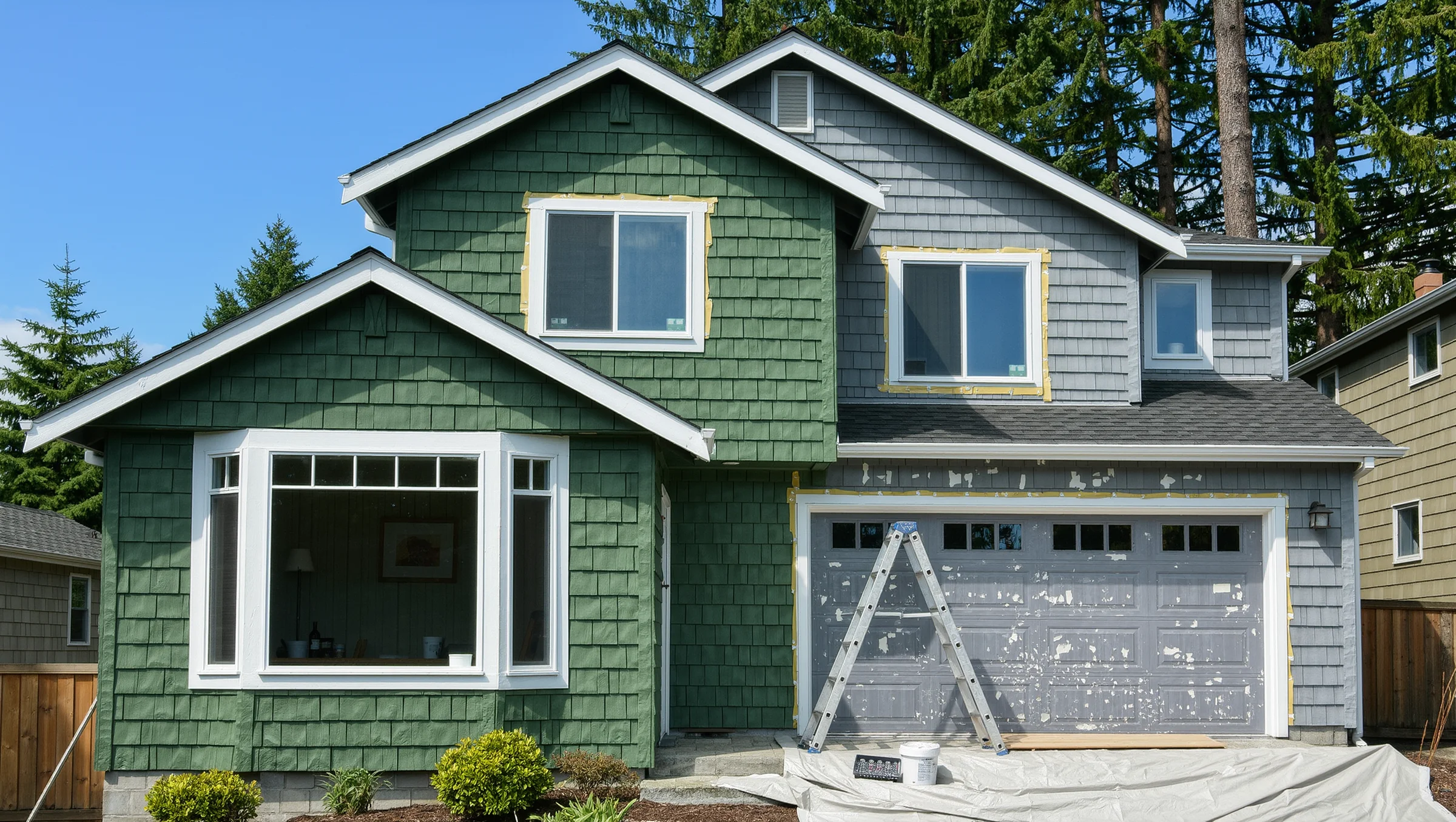
In Bellevue, the dependable window for painting a house exterior is usually late spring through early fall, when the siding is dry and the nights stay mild. Modern exterior paints can go on at temperatures as low as 35°F, but the surface also has to be dry and the temperature has to stay in range, above the dew point, for about 48 hours after painting. That rarely happens from November to March.
So in the rainy season, paint inside, plan the exterior, and book it for the dry months.
What weather does exterior paint need?
Paint needs a dry surface and enough warmth to form a film. These are the conditions paint makers set:
| Condition | What paint makers say | Why it matters |
|---|---|---|
| Minimum temperature | Traditional latex needs 50°F or above; newer low-temperature paints go down to 35°F | Below the minimum, the paint doesn’t film together properly |
| Overnight temperature | Stay in the suggested range and above the dew point for at least 48 hours after painting | A cold night can stop the paint curing even if the day was warm |
| Dry surface | No rain, dew or frost on the siding | Water under or in the wet film causes adhesion problems, streaks and mildew |
| Time before rain | From about 1 hour for rain-resistant formulas to 4 hours for most coatings | Rain on fresh paint washes it out or leaves marks |
Sherwin-Williams says that “until a few years ago you needed to paint above 50° F,” and that products such as Duration, Resilience and SuperPaint now allow painting “down to 35° F.” It adds that, ideally, “the temperature should be in the suggested range and above the dew point for at least 48 hours after application” (Sherwin-Williams, Exterior Product Application FAQs, checked November 2026). Benjamin Moore’s Element Guard lists application “in temperatures as low as 35°F and as high as 100°F” and rain resistance “as soon as 60 minutes after application” (Benjamin Moore, Element Guard, checked November 2026).
Always follow the label of the product actually being used. These limits differ from paint to paint.
When is exterior painting season in Bellevue?
Typically:
- Best: late June through September. This is usually the driest stretch of the year, with warm days and mild nights, so siding dries out and stays dry.
- Possible with care: May, early June and early October, during dry spells, with a low-temperature paint and a close eye on the forecast.
- Not recommended: November through March, except small touch-ups on a dry, mild day. Siding stays damp, days are short, and dew forms early in the evening.
These are typical patterns, not guarantees. A wet June or a dry October can shift the window either way.
Why does wet weather ruin a paint job?
Moisture is the main enemy, more than cold. Sherwin-Williams notes that dew “will form on almost everything as soon as the sun sets, and seep into the uncured paint,” and that when it evaporates, ingredients rise to the surface and cause “surface staining and potential adhesion problems” (Sherwin-Williams, Late-Season Painting, checked November 2026).
Problems that show up after painting in damp weather:
- Peeling and blistering where paint went over wet wood
- Streaks or sticky brown spots (surfactant leaching) when dew or rain hits fresh paint
- Mildew growing on a film that never fully cured
- A shorter life for the whole job, even if it looks fine at first
Can you paint in fall or early spring?
Yes, on the right days, if the crew follows a few rules:
- Check the forecast for 48 hours, not just today. Overnight lows matter as much as the afternoon high.
- Start after the dew has dried and the siding is dry to the touch, usually mid-morning.
- Stop early. Leave enough time for the paint to resist moisture before evening dew; a common mistake, according to Sherwin-Williams, is painting when daytime temperatures are above 50°F but nights drop below 35°F.
- Follow the sun around the house. Paint each side once it has dried and warmed, and avoid walls that stay shaded and damp all day.
- Use a paint rated for low temperatures, and check its label for the minimum and the rain-free time.
What can you paint in winter instead?
The rainy season is a good time for interior painting: walls, ceilings, trim, doors and cabinets. The heating is on, the weather doesn’t matter, and painters usually have more open dates than in summer. A few tips (our guide to interior painting in winter has more detail):
- Keep the heat on and a window cracked or a fan running so the paint dries and fumes clear.
- Plan rooms in an order that lets you keep living in the house.
- If your windows sweat in winter, fix the moisture first; paint on wet sills and frames won’t last. See window condensation: fix or replace.
What prep makes an exterior paint job last?
Most of a lasting paint job is preparation, done in dry weather:
- Wash the siding to remove dirt, mildew and chalky old paint, then let it dry fully.
- Scrape and sand loose or peeling paint.
- Repair rot in siding, trim and sills before painting over it.
- Prime bare wood and repairs.
- Caulk gaps at trim, windows and corners.
If the house was built before 1978, the old paint may contain lead. Paid painters disturbing that paint must follow federal lead-safe work rules (the EPA’s Renovation, Repair and Painting rule), and you should ask for the firm’s certification. Our guide to remodeling an older Bellevue home explains what to ask for.
When should you book exterior painting?
Over the winter. Use the rainy months to choose colors, have the house looked at for rot and prep work, and get written quotes. Many painters’ summer calendars fill early, so booking in winter or early spring gives you the best chance at a dry-season date.
Before you ask for quotes, it helps to have:
- Photos of problem areas: peeling paint, soft wood, stains under gutters.
- Color ideas, and any HOA approval your neighborhood requires for exterior colors. Some HOAs take weeks to reply.
- The year the house was built, so the painter can plan for lead-safe work if needed.
- What’s included: siding only, or also trim, doors, gutters, fences and the deck.
Frequently asked questions
Can you paint in light drizzle? No. Even light rain puts water on the surface and into the wet film. Wait until the rain has stopped and the siding is dry.
How long after rain can you paint? Until the siding is dry, not just until the rain stops. Wood can stay damp for a day or more after heavy rain, especially on shaded walls. Painters often check with a moisture meter before starting.
Does a 35°F paint mean I can paint in winter? Not really. The 35°F rating is the minimum temperature. The surface still has to be dry and the temperature has to stay in range for days afterward, which a Bellevue winter rarely allows.
Plan your painting with us
We give free on-site estimates for interior and exterior painting in Bellevue and the Eastside. Book interior painting this winter, or let us look at your exterior now and schedule it for the dry season with a written, itemized quote. Request your free estimate.